In the Chapter of Indian Cinema after Hindi film industry (Bollywood), South Indian film industry is famous for her Acting & Drama. Commonly South Indian film industry is popular as Cine South. It includes Tamil, Telugu, Kannada & Malayalam film industries. The first South Indian film “Keechaka Vadham” released in 1916 by R. Nataraja. At that time Madras is the famous City in South. AVM production established in Madras. This is the first production house for South Indian Film makers. Soon after R. Nataraja the famous director H.M Reddy released “Bhakta Prahlada” as the first south Indian talkie film. Days gone & Today South Indian film industry is well established for her Creative attempts.

Historical Evolution
The roots of South Indian Film Industry trace back to the early 20th century, with silent films like Keechaka Vadham (1916) marking the inception of Tamil cinema. The advent of talkies in the 1930s revolutionized storytelling, with films such as Kalidas (1931) setting the stage for linguistic and cultural representation. Telugu cinema flourished with Bhakta Prahlada (1931), while Malayalam and Kannada industries gained momentum in the post-independence era.
The golden age of South Indian cinema (1950s–1970s) saw auteurs like K. Balachander, B. Vittalacharya, and P. Bhaskaran crafting socially relevant narratives. Parallel cinema movements emerged, with directors such as Adoor Gopalakrishnan and Girish Karnad redefining Malayalam and Kannada cinema through realism and artistic depth.
You may observed about the Audience of South India, they are true fan to watch Cinema. By watching this Customers demand many reputed directors come into the dice for invest in Cine South. Among them few popular Directors are N. T. Rama Rao, Mani Ratnam, Kamal Haasan, K. Balachander, Satyajit Ray & Prakash Raj. In 1996 by Ramoji Group members the world’s largest film City “Ramoji Film City” is established in Hayathnagar Mandal in Hyderabad, Andhra Pradesh. The complex of Ramoji Film City is near to 2000 acres. Ramoji Film City offers an wide range of production & post production services for global film makers.

South Indian Actors and Actresses
Among South Indian Actors few well popular actors are Rajnikanth, Jr. NTR, Surya, Chiranjeevi, Kamal Haasan, Nagarjuna, N. T. Rama Rao, Venkatesh & R. Madhavan. I worked more then 5 years in South. From my personal experience, You don’t believe South Indian cine fans are celebrating their favorite Actors birthday like a festival. They distribute sweets to general public & dance for whole the night in-front of their favorite Actor’s photo copy. I can say they pray the Actors like Rajnikanth & Chiranjeevi.
More about Chiranjeevi, He is one of the greatest actor in south. He can play any role with ease. With his dances he can simply mesmerize audience. When Chiranjeevi dances none looks at the lady dancer and the total concentration will be on Chiranjeevi & Chiranjeevi alone. Such an impact he created on audience. People would throng theaters to watch Chiranjeevi in action let whatever the movie it be, a success or failure. The same happens in case of Rajnikanth too. Rajnikanth is popular for his unique expressions.
The Legends of South Indian Film
South Indian cinema has long been a powerhouse of storytelling, technical brilliance, and cultural influence. Spanning Tamil, Telugu, Malayalam, and Kannada film industries, it has produced some of the most iconic actors, directors, and musicians whose contributions have shaped Indian cinema as a whole. From the golden era of black-and-white films to today’s pan-Indian blockbusters, South Indian legends have left an indelible mark on audiences worldwide.
Rajinikanth – Born Shivaji Rao Gaekwad, Rajinikanth is a cultural icon whose influence transcends cinema. With his unique style, punch dialogues, and magnetic screen presence, he has earned a massive fan following across India and beyond. Films like Baasha, Sivaji, and Enthiran showcase his ability to blend mass appeal with nuanced performances.
Kamal Haasan – A multifaceted genius, Kamal Haasan is revered for his acting prowess, direction, and screenwriting. Known for films like Nayakan, Indian, and Vishwaroopam, he has pushed the boundaries of storytelling in Indian cinema.
Mohanlal – One of Malayalam cinema’s finest, Mohanlal’s natural acting style has earned him critical acclaim. Films like Manichitrathazhu, Drishyam, and Pulimurugan highlight his versatility, from intense dramas to commercial entertainers.
Chiranjeevi – A megastar of Telugu cinema, Chiranjeevi has acted in over 150 films, blending action, drama, and comedy effortlessly. His contributions to cinema and philanthropy have earned him the Padma Vibhushan.
Leading Contemporary South Indian Actors
Prabhas: The Pan-Indian Superstar
Born as Uppalapati Venkata Suryanarayana Prabhas Raju, Prabhas rose to international fame with his portrayal of Baahubali in S.S. Rajamouli’s epic two-part saga, Baahubali: The Beginning (2015) and Baahubali: The Conclusion (2017). His towering presence, dedication to the role, and intense performance made him a household name beyond South India.
Before Baahubali, Prabhas had already established himself as a leading actor in Telugu cinema with films like Chatrapathi (2005), Mirchi (2013), and Darling (2010). His ability to blend mass appeal with nuanced performances sets him apart. Post-Baahubali, he continued his pan-Indian dominance with Saaho (2019) and Radhe Shyam (2022), though with mixed reception. His upcoming projects, including Salaar and Project K, are highly anticipated, reinforcing his status as a global star.
Vijay: The People’s Champion
Joseph Vijay Chandrasekhar, popularly known as Vijay or Thalapathy (Commander), is one of Tamil cinema’s biggest superstars. With a career spanning over three decades, Vijay has evolved from a romantic hero to a mass action icon, commanding an unparalleled fan following.
His early films like Poove Unakkaga (1996) and Kadhalukku Mariyadhai (1997) showcased his romantic appeal, while later works such as Ghilli (2004), Thuppakki (2012), and Mersal (2017) cemented his position as a box-office king. Known for his socially relevant scripts and electrifying screen presence, Vijay balances commercial cinema with subtle political undertones, as seen in Sarkar (2018) and Master (2021).
Beyond acting, Vijay’s philanthropic efforts and connection with fans make him a cultural phenomenon. His upcoming film, Leo, directed by Lokesh Kanagaraj, is one of the most awaited projects in Indian cinema.
Allu Arjun: The Stylish Icon
Allu Arjun, often referred to as the “Stylish Star,” is a trendsetter in Telugu cinema. Known for his impeccable dance moves, unique fashion sense, and dynamic performances, he has carved a niche for himself as one of the most bankable stars in India.
His breakthrough came with Arya (2004), followed by hits like Bunny (2005), Parugu (2008), and Race Gurram (2014). However, it was Ala Vaikunthapurramuloo (2020) that propelled him to nationwide fame. His portrayal of Pushpa Raj in Pushpa: The Rise (2021) became a cultural phenomenon, with his dialogue delivery, rugged look, and swag resonating across the country.
Allu Arjun’s ability to reinvent himself with each film, combined with his electrifying screen presence, makes him a force to reckon with. The sequel, Pushpa: The Rule, is expected to further solidify his pan-Indian stardom.
Yash: The Kannada Sensation
Naveen Kumar Gowda, popularly known as Yash, revolutionized Kannada cinema with his blockbuster K.G.F franchise. Before K.G.F, he was already a star in Sandalwood with films like Moggina Manasu (2008), Rajadhani (2011), and Mr. and Mrs. Ramachari (2014). However, K.G.F: Chapter 1 (2018) and K.G.F: Chapter 2 (2022) catapulted him to national fame.
His portrayal of Rocky, a ruthless yet charismatic underworld kingpin, became iconic. The gritty narrative, high-octane action, and Yash’s magnetic performance made K.G.F a pan-Indian success. His dialogue, “Power… Power is everything,” became a pop-culture sensation.
Yash’s influence extends beyond cinema—his humble background and rise to stardom inspire millions. With rumors of K.G.F: Chapter 3 and other big projects in the pipeline, his stardom shows no signs of slowing down.
Trailblazing Actresses
Savitri – A legendary actress of the golden era, Savitri was known for her emotive performances in films like Missamma and Mayabazar.
Vyjayanthimala – Transitioning from South Indian to Hindi cinema, Vyjayanthimala became one of India’s most celebrated actresses, known for her classical dance and acting in Devdas and Sangam.
Rekha – Though primarily a Bollywood icon, Rekha began her career in South Indian films, showcasing her versatility early on.
Nayanthara – Dubbed the “Lady Superstar,” Nayanthara has redefined female stardom in South India with powerful roles in Aramm, Darbar, and Jawan.
Samantha Ruth Prabhu – From romantic roles to action-packed performances, Samantha has proven her versatility in films like Super Deluxe and The Family Man.
Trisha Krishnan – A leading actress in Tamil and Telugu cinema, Trisha is known for her performances in Vinnai Thaandi Varuvaaya and 96.
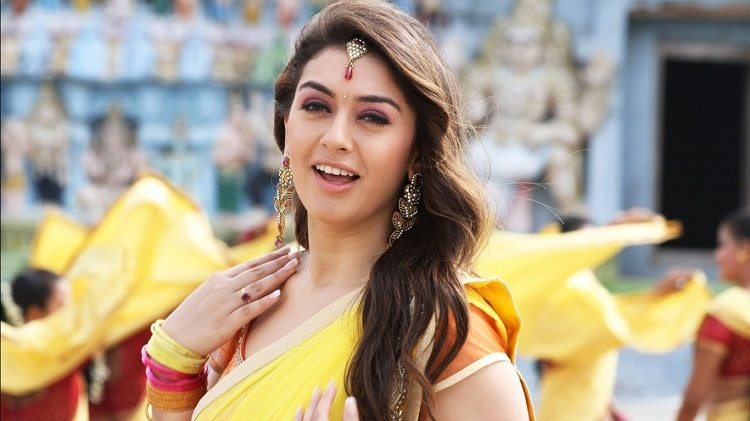
South Indian film industry is believed to be much more advanced than Hindi Cinema Industry. In this millennium few of the talented glamors from South are Shriya Saran, Nayanthara, Namitha, Kajal Agarwal, Tamannaah Bhatia, Samantha, Shruti Haasan (The Daughter of Kamal Haasan), Bhavana Menon, Asin Thottumkal, Anushka Shetty, Southern hottie Priyamani, Tapsee Pannu, Trisha Krishnan & Ileana D’Cruz. As I discussed above Cine South is more advanced than Bollywood. These talented glamors are also take part in many Bollywood movies.

With this minimal Intro to Cine South, for the fans of South Indian beauties here I am sharing some exclusive photos & videos. Hope you will like this.
Technological Advancements
South Indian cinema has consistently pushed technical boundaries. The use of VFX in Baahubali, the experimental cinematography in Malayalam films, and the seamless blending of practical effects in Tamil action sequences showcase the industry’s innovation. Studios like Annapurna (Telugu) and AVM (Tamil) have invested heavily in cutting-edge production facilities, rivaling global standards.
Music and Dance
Music is integral to South Indian films, with composers like A.R. Rahman, Ilaiyaraaja, and M.M. Keeravani creating timeless soundtracks. Classical Carnatic and folk influences dominate, while contemporary tracks incorporate global genres. Dance sequences, rooted in Bharatanatyam and Kuchipudi traditions, add cultural richness, distinguishing South Indian films from other regional cinemas.
Global Influence of South Indian Film Industry
South Indian films have gained international recognition through film festivals and digital platforms. The Lunchbox (Malayalam), Jallikattu (2019), and Sarpatta Parambarai (2021) have been critically acclaimed abroad. The diaspora audience, particularly in the U.S., UK, and Middle East, has further amplified the industry’s reach. Streaming services like Netflix and Amazon Prime have also facilitated global viewership.
Regional Distinctions and Contributions
Tamil Cinema (Kollywood)
Tamil cinema, based in Chennai, is renowned for its commercial blockbusters and artistic ventures. The industry birthed legends like M.G. Ramachandran (MGR) and Sivaji Ganesan, whose films blended entertainment with political undertones. Modern Tamil cinema balances mass appeal with substance, as seen in the works of Mani Ratnam (Nayakan, Ponniyin Selvan) and emerging voices like Vetrimaaran (Asuran, Vada Chennai).
Telugu Cinema (Tollywood)
Telugu films dominate the pan-Indian market with grandiose productions and star-driven narratives. The industry boasts icons like N.T. Rama Rao and Chiranjeevi, whose films shaped Telugu identity. Contemporary Telugu cinema, led by S.S. Rajamouli (Baahubali, RRR), has redefined scale and global appeal, while directors like Sekhar Kammula (Love Story) explore nuanced storytelling.
Malayalam Cinema (Mollywood)
Malayalam films are celebrated for their realism, strong scripts, and minimalistic aesthetics. Pioneers like Satyajit Ray praised the works of Adoor Gopalakrishnan (Elippathayam) and G. Aravindan (Thampu). Today, filmmakers like Lijo Jose Pellissery (Jallikattu) and Dileesh Pothan (Maheshinte Prathikaaram) continue this legacy, blending artistry with commercial viability.
Kannada Cinema (Sandalwood)
Kannada cinema, though smaller in scale, has produced timeless classics (Samskara, Ondanondu Kaladalli) and commercial hits starring Rajkumar. Recent years have seen a resurgence with films like Kantara (Rishab Shetty) and 777 Charlie (Kirik Party), showcasing innovation and cultural pride.
Music Maestros who elevated South Indian Film
The golden era of South Indian cinema owes much of its brilliance to the legendary composers who crafted unforgettable melodies, blending tradition with innovation. Their music transcended linguistic barriers, resonating with audiences across generations.
1. M. S. Viswanathan: The Melody King
M. S. Viswanathan, often referred to as “Mellisai Mannar” (King of Light Music), redefined film scoring in the 1950s–1970s. His collaborations with lyricist Kannadasan produced timeless classics. Known for his versatility, MSV effortlessly transitioned between Carnatic-based compositions and Western-inspired tunes. Songs like “Aayirathil Oruvan” (from Ulagam Sutrum Vaaliban) and “Kanne Kalaimaane” (from Moondram Pirai) showcase his ability to evoke deep emotion through simplicity. His partnership with T. K. Ramamoorthy (as the MSV-TKR duo) further enriched Tamil cinema with harmonious melodies.
2. K. V. Mahadevan: The Symphony of Tradition
K. V. Mahadevan’s contributions to Telugu and Tamil cinema were monumental. A master of classical music, he composed for epics like Mayabazar and Nartanasala, infusing mythological themes with grandeur. His work in Shankarabharanam (1980) revived interest in Carnatic music among younger audiences. Mahadevan’s orchestration was meticulous, blending veena, mridangam, and flute to create a distinctly Indian orchestral sound. His legacy endures in songs like “Bhale Bhale Mogadivo”, which remain cultural touchstones.
3. Devarajan & Raveendran: The Malayalam Virtuosos
The duo G. Devarajan and M. K. Raveendran revolutionized Malayalam cinema with their soulful compositions. Devarajan’s background in classical music and Raveendran’s flair for folk rhythms produced hits like “Manasa Maine” (from Chemmeen) and “Ponnil Kulichu” (from Nellu). Their music captured Kerala’s rustic charm while addressing universal themes of love and longing. Devarajan’s “Ente Kaanakkuyil” remains an anthem of melancholy, showcasing his ability to merge poetry with melody.
4. Ilaiyaraaja: The Maestro of Modernity
Ilaiyaraaja bridged the gap between classical and contemporary, introducing symphonic arrangements to South Indian films. Raja’s collaborations with directors like Bharathiraja and Balu Mahendra yielded gems such as “Ponmalai Pozhudhu” (from Nizhalgal) and “Nilave Vaa” (from Mouna Ragam). His use of Western harmonies with Indian ragas set a new benchmark, influencing generations of musicians.
5. A. R. Rahman: The Global Icon
A. R. Rahman’s arrival in the 1990s marked a seismic shift. Fusing electronic music with Indian classical roots, he created a fresh sonic identity for films like Roja and Bombay. Tracks like “Chinna Chinna Aasai” and “Uyire Uyire” redefined romance, while “Jai Ho” (from Slumdog Millionaire) catapulted him to global fame. Rahman’s experimentation—from qawwalis (“Khwaja Mere Khwaja”) to Sufi rock (“Kun Faya Kun”)—demonstrated his boundless creativity. His Oscar wins cemented South Indian music’s place on the world stage.
The Future of South Indian Film Industry
One of the most significant drivers of change in the South Indian film industry is technology. The advent of high-definition cameras, advanced VFX, and AI-driven post-production tools has revolutionized filmmaking. Directors and producers are no longer constrained by budget limitations when it comes to visual effects, enabling them to create grandiose spectacles that rival Hollywood productions.
Virtual production, powered by LED walls and real-time rendering, is another game-changer. Films like Baahubali and RRR showcased the potential of Indian cinema in leveraging cutting-edge technology. As these tools become more accessible, smaller productions will also adopt them, democratizing high-quality filmmaking.
Streaming platforms have also embraced technological advancements, offering 4K and HDR content. This shift has forced filmmakers to prioritize technical excellence, ensuring their work meets global standards.
However, sustaining this momentum requires addressing challenges like piracy, preserving regional identity, and nurturing new talent. If the industry embraces these changes while staying true to its roots, South Indian cinema is poised to dominate not just India but the global entertainment landscape.
The coming decade will be transformative, with South Indian films transcending borders and setting new benchmarks in storytelling and technical excellence. As audiences worldwide embrace these narratives, the industry’s influence will only grow stronger, cementing its place as a cultural and cinematic force to reckon with.
Conclusion
The legends of South Indian cinema have not only entertained but also preserved cultural heritage, pushed artistic boundaries, and inspired generations. Their legacy continues to thrive, proving that great storytelling transcends language and geography. As the industry evolves, these icons remain immortal in the hearts of millions.